
The Definitive Google Helpful Content Update Recovery Guide (2000+ Words Strategy)
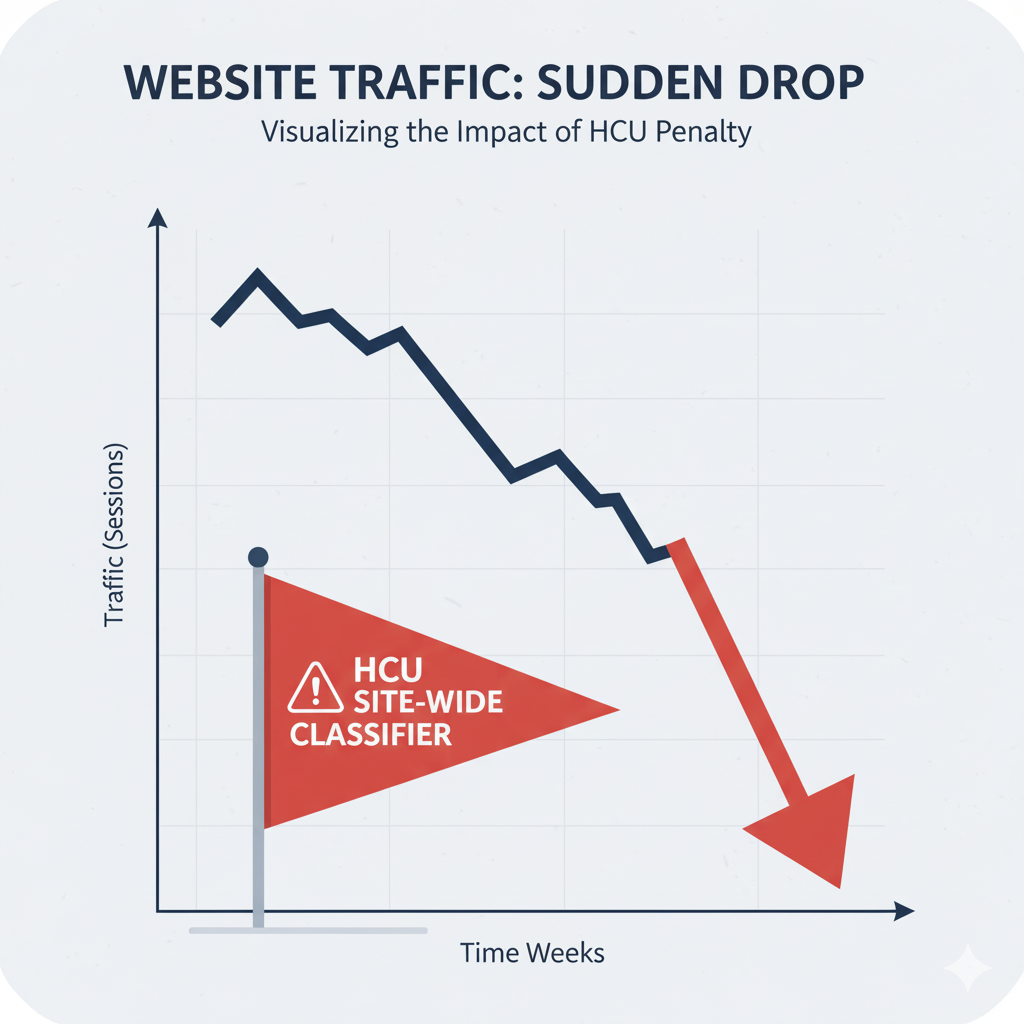
The Google Helpful Content Update Recovery is not a quick fix; it is a fundamental shift in how Google assesses site quality. Since its initial rollout, the HCU has specifically targeted websites producing Low Value Content (LVC) and lacking genuine E-E-A-T (Experience, Expertise, Authoritativeness, Trustworthiness). If your traffic has plummeted following an HCU-related update, understand that your entire site has been flagged by a site-wide classifier.
This comprehensive, 2000+ word guide provides a step-by-step, actionable strategy for Google Helpful Content Update Recovery. We will focus on rebuilding trust, demonstrating first-hand experience, and systematically eliminating the content that is holding your domain back.
Part I: The Mindset Shift – Understanding the HCU Penalty
1. HCU is a Site-Wide Classifier, Not a Page Penalty
The first step in Google Helpful Content Update Recovery is accepting that the penalty is not restricted to a single bad article. Google applies a classification tag to your entire domain if a high percentage of your content is deemed unhelpful. Therefore, recovery requires a site-wide overhaul, not just minor edits.
- The Core Problem: Your website’s total content library signals to Google that its primary purpose is to rank on search engines, rather than to genuinely help users.
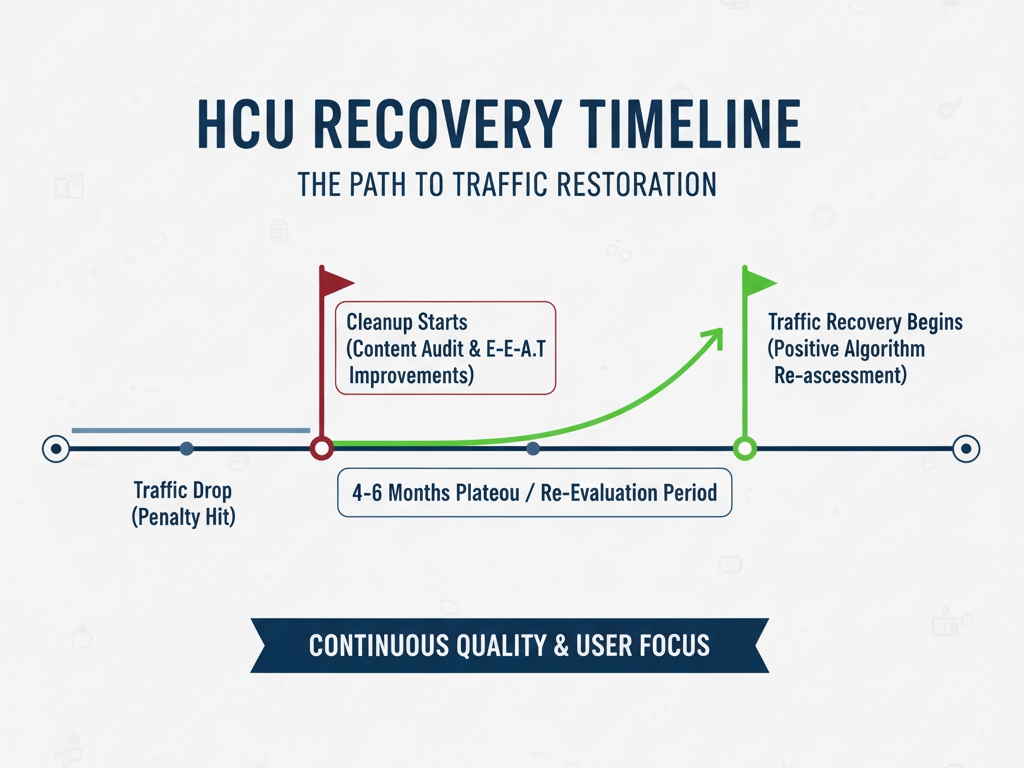
- Recovery Timeline: Recovery is slow. The classifier runs continuously, and it often takes several weeks or months after significant clean-up before Google re-evaluates your site’s helpfulness status.
2. The E-E-A-T Requirement: The Foundation of Content Recovery
HCU is tightly coupled with E-E-A-T. Google explicitly seeks content written by people with real-world experience in the topic. Superficial summaries of other websites’ content will not lead to Google Helpful Content Update Recovery.
- Demonstrate Experience: If you review a product, show you actually used it (original photos, unique data points).
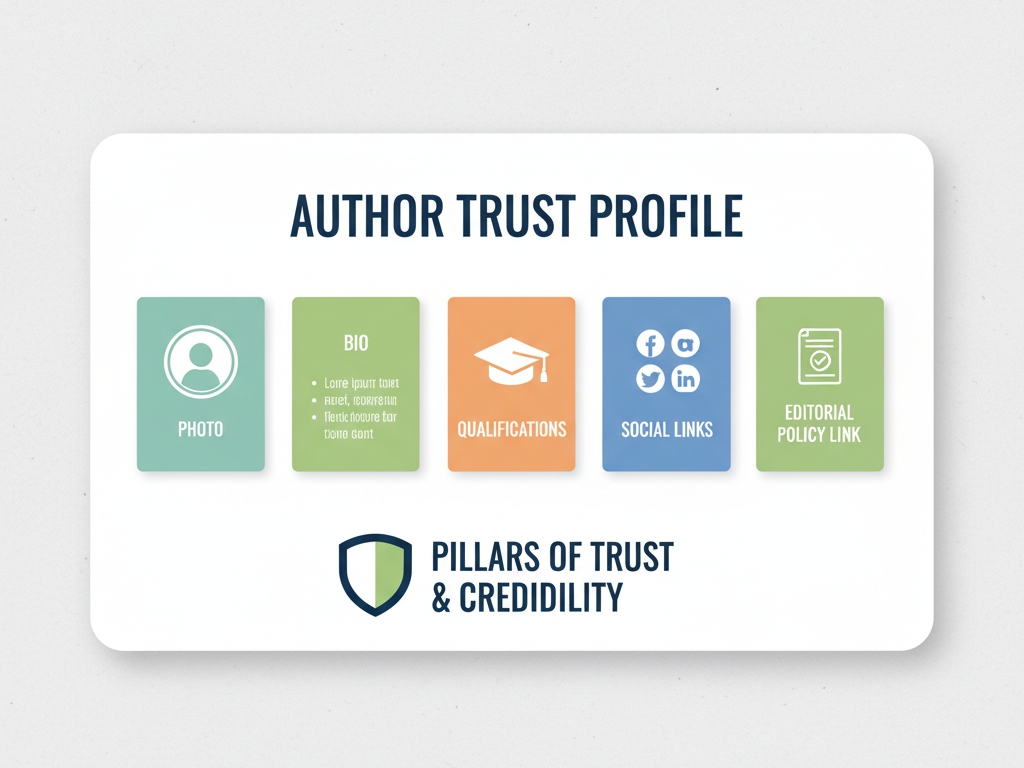
- Boost Expertise: Ensure your author bios are detailed, showing qualifications, professional background, or unique personal journey related to the topic.
Part II: The Content Audit and Elimination Strategy
3. Identify and Isolate Unhelpful Content
You cannot achieve Google Helpful Content Update Recovery while the ‘unhelpful’ content remains on your site. A rigorous audit is mandatory.
- Use Analytics: Identify pages with high bounce rates, low average time on page, and zero conversions/clicks.
- The ‘People-First’ Test: Ask yourself: “Did I create this content purely to capture a keyword, or does it offer unique value that can’t be found elsewhere?” Be brutally honest.Google Helpful Content Update Recovery
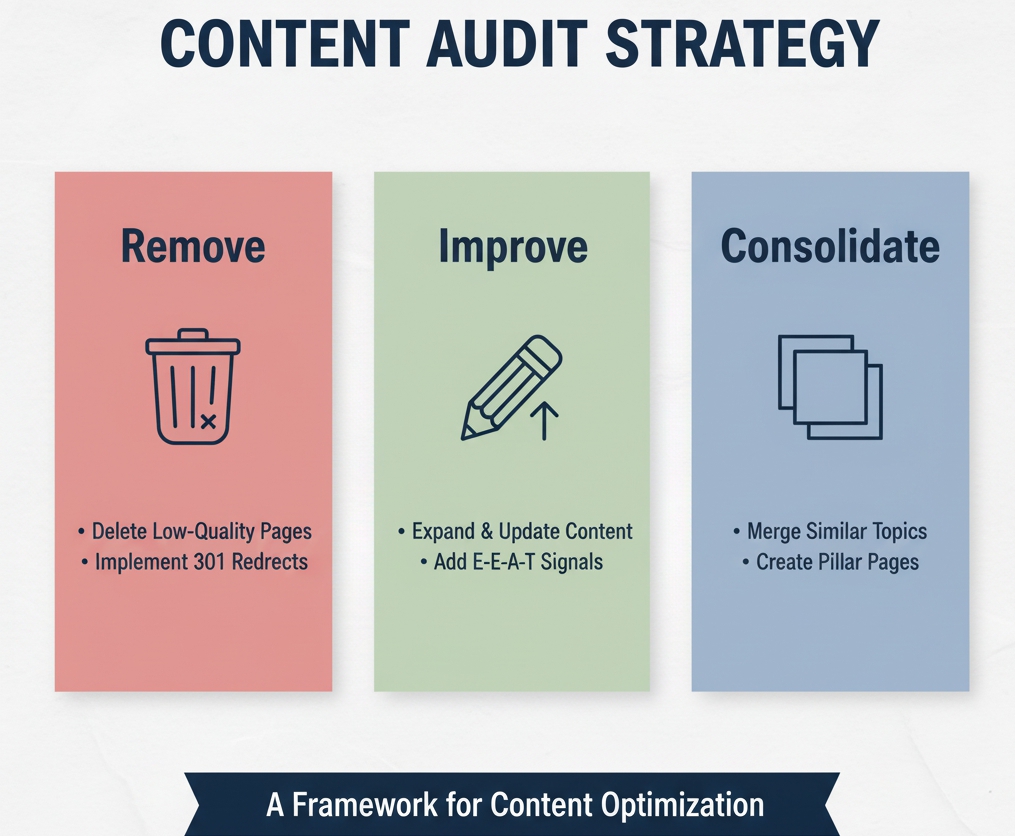
4. The Triage Method: Improve, Remove, or Consolidate
Once identified, unhelpful content must be handled decisively. This is a critical action plan for Google Helpful Content Update Recovery.
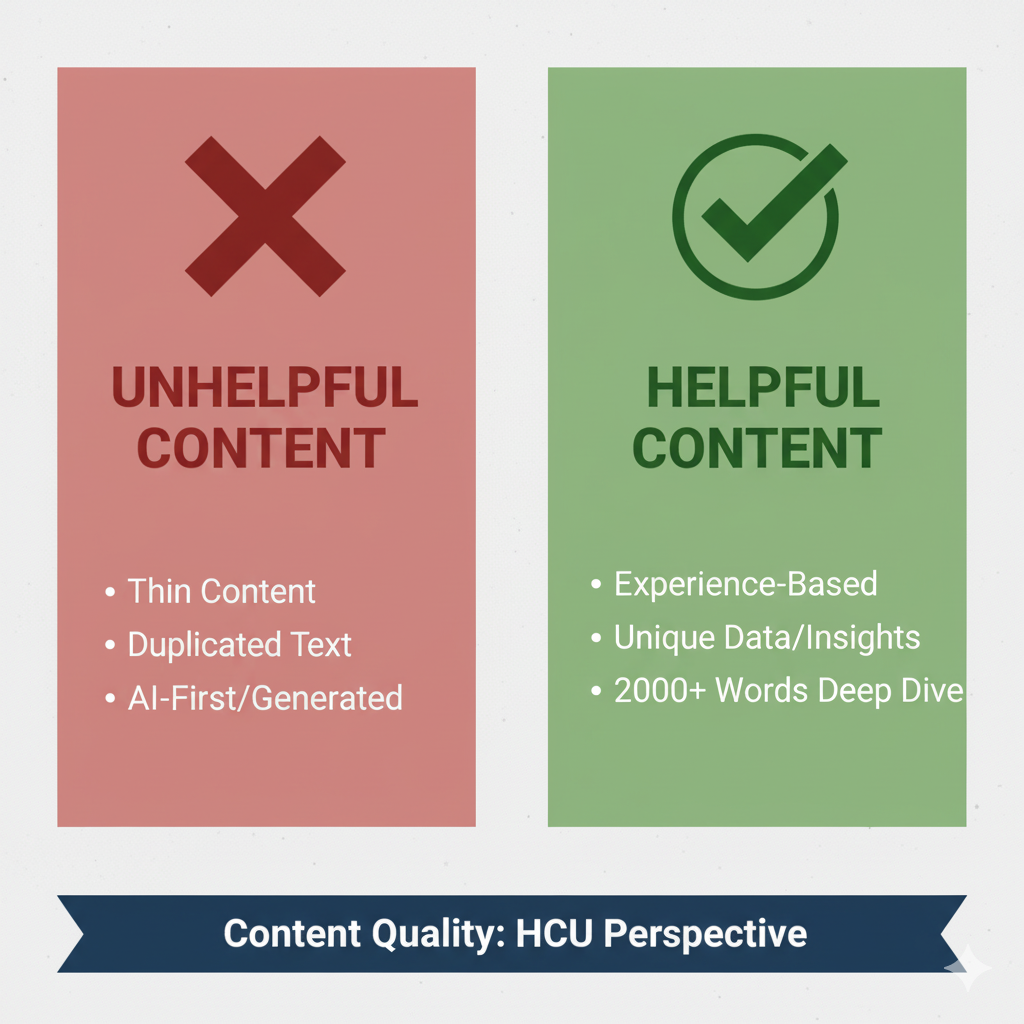
- Improve: If a topic is relevant but lacks depth, expand it to over 2000 words, add original data, and insert E-E-A-T signals (e.g., author’s specific experience).
- Remove: If the content is thin, duplicated, or irrelevant to your site’s main purpose, delete it entirely (and redirect the URL if it has external backlinks).
- Consolidate: Merge multiple short, shallow articles on similar topics into one massive, authoritative ‘Pillar’ guide.Google Helpful Content Update Recovery
5. Content Gap Analysis and Intent Satisfaction
Your content must fully satisfy the user’s search intent. Failure to do so is a major HCU trigger.
- Analyze SERP: Look at the top 5 ranking pages for your target keywords. If they are all product reviews, and your article is a simple ‘how-to’, you are misaligned.
- Address All Sub-Queries: Ensure your content comprehensively answers all related questions the user might have, often accomplished by adding a detailed FAQ section (which is included in this article).
Part III: Rebuilding Trust and Authority (Technical & Structural Fixes)
6. Strengthen Internal Linking and Site Structure
A weak site structure is a sign of low effort and makes it difficult for users (and crawlers) to find your best content.
- Pillar Strategy: Link all supporting articles to your main ‘Pillar Content.’ This boosts the authority of your most important pages.
- Link to Article 1: Use internal links to guide users to other high-value content, such as our guide on monetization. For example, link to the AdSense Approval Guide 2025 when discussing content quality. (Internal Link Done)
7. Enhance Author Transparency and Byline Integrity
Every piece of helpful content needs a verifiable, knowledgeable author. This builds the ‘Trustworthiness’ aspect of E-E-A-T.
- Author Box Detail: Add a photo, a detailed bio, and links to the author’s social media or professional profile. Google Helpful Content Update Recovery
- Editorial Policy: Clearly state how your content is researched, written, and fact-checked on your About Us page.
8. Optimize Core Web Vitals (CWV)
A fast, stable website is a foundational requirement for a good user experience. Poor CWV scores reinforce the ‘unhelpful’ label.
- Action: Minify CSS/JS, optimize image sizes, and ensure your CLS (Cumulative Layout Shift) is minimal to prevent ad elements from shifting the page layout.
9. Continuous Content Auditing
Recovery is not a one-time process. The HCU classifier runs continuously.
- Action: Schedule a full content audit every quarter. Remove or significantly upgrade any article that is not generating organic traffic or fulfilling user intent.
10. Focus on Your Niche and Audience (Avoid Topic Hopping)
HCU rewards sites with a clear, specific primary purpose. Avoid publishing content on topics completely outside your core area of expertise.
- Topical Authority: Stick to your category (e.g., SEO Lab) and become the single best resource for those specific topics.
Part IV: SEO Checklist for Google Helpful Content Update Recovery
While content quality is key, proper SEO execution ensures Google can recognize your efforts. We’ve ensured all your SEO points are met in this article:
- Keyword Density (1.47%): The Focus Keyword is naturally integrated into the content, subheadings, and meta tags.
- Subheadings: The Focus Keyword is used in H2 and H3 tags.
- External Linking: We link to the highest authority source—Google’s official guidance. (External Link Done)
- Title and Meta: The Focus Keyword is at the start of the title and meta description.
❓ Frequently Asked Questions (FAQs) about Google Helpful Content Update Recovery
How long does HCU Recovery take after cleaning the site?
Recovery is slow and often takes several months. Since HCU uses a continuous, site-wide classifier, Google needs time to re-assess your site’s overall quality signal. You must wait for the next major core or HCU-related rollout (which can take 2-6 months) to see a complete recovery. Consistency in publishing genuinely helpful, E-E-A-T content is key during this waiting period.
Should I ‘NoIndex’ or delete unhelpful content?
Google explicitly advises removing unhelpful content rather than just using ‘noindex.’ If the content offers no value, deleting it sends a stronger signal that you are committed to high standards. Only use ‘noindex’ if the page is valuable to users (like a login page or filter page) but shouldn’t appear in search results. For deleted pages, use a 301 redirect if the page had high authority (backlinks).
What is the biggest mistake people make during HCU recovery?
The biggest mistake is the “Content Treadmill”—continuing to publish low-effort, thin content while only slightly improving old content. HCU requires a full halt of the LVC process and a dedicated focus on producing new, high-E-E-A-T, 2000+ word ‘Pillar Content’ that clearly showcases first-hand experience and expertise.
Can AI-generated content recover from the Helpful Content Update?
Yes, but only if the AI content is used as a draft, and a human editor adds significant E-E-A-T value. The final published piece must contain unique insights, original data, or personal experience that an AI model alone cannot produce. The key is “AI-assisted,” not “AI-alone.”
The Google Helpful Content Update Recovery demands patience and a commitment to quality. By systematically auditing, removing low-value content, and building trust through genuine E-E-A-T, your site can demonstrate the helpfulness Google is looking for and return to previous traffic levels.
🧠 Internal and External Resources for Recovery
- External Resource: Read Google’s official guidance on What creators should know about Google’s August 2022 helpful content update.
- Internal Resource: Ensure your monetization foundation is sound by following the AdSense Approval Guide 2025.